

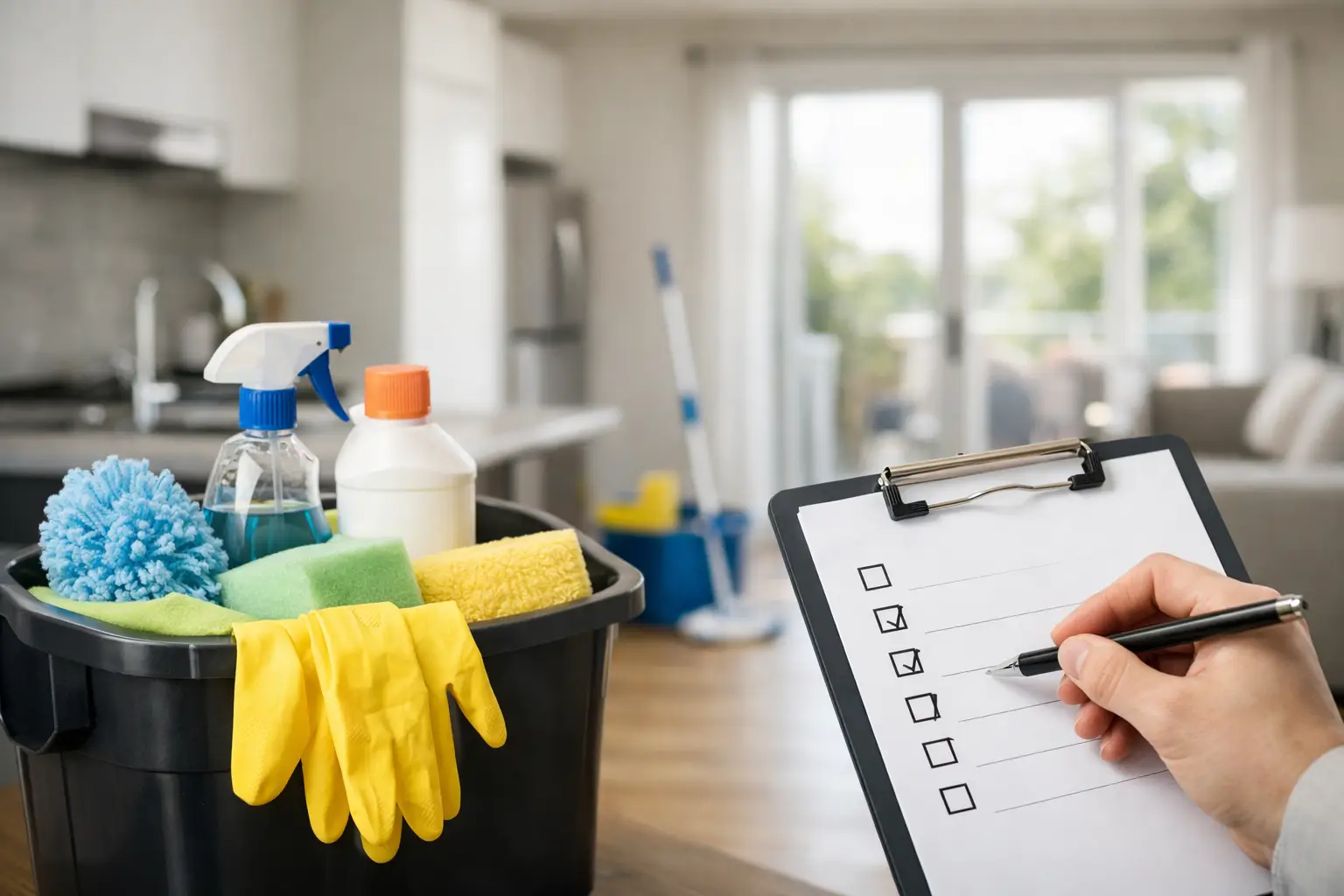
A rental handover can be decided by details that are easy to miss during a normal weekly clean: grease behind the stove, soap residue on shower glass, dust on ceiling fans, or a drain holding hair and odor. This cleaning checklist before rental handover is designed for tenants in Singapore who want to return an HDB flat, condo, studio, or landed home in a clean and presentable condition before the final inspection.
The goal is not to make an older home look brand new. Normal wear, such as faded paint or aging fixtures, is different from dirt, buildup, stains, and damage. Your tenancy agreement, inventory list, and any move-in photos should remain the main reference. Still, a careful end-of-tenancy clean gives you a much better starting point for a smooth discussion with the landlord or property agent.
Start With the Handover Requirements
Before opening a bottle of cleaner, read the tenancy agreement again. Some agreements specifically require professional cleaning, steam cleaning for carpets, air-conditioner servicing, curtain cleaning, or pest treatment. Others only require the property to be returned in reasonably clean condition. Do not pay for add-ons simply because they appear on a generic checklist if they are not part of your agreement or the condition of the unit does not call for them.
Take clear photos of each room before cleaning, especially areas with existing scratches, chips, stains, or maintenance issues. Then photograph the same areas after cleaning. If the landlord supplied appliances, check that every item listed in the inventory is still present and test basic functions where practical.
It also helps to schedule cleaning after furniture has been removed. Cleaning around packed cartons or a sofa that will leave the next day usually means cleaning the same floor twice. If movers are involved, leave enough time between the move and inspection for floors to dry and for any marks left by moving to be addressed.
Cleaning Checklist Before Rental Handover: Room by Room
Work from high surfaces down to the floor. In Singapore’s humid conditions, trapped moisture can quickly create musty smells, while kitchen grease and bathroom residue become harder to remove when left for months. Opening windows where safe and using fans during cleaning can help surfaces dry properly.
Kitchen
The kitchen is often the most closely inspected room because grease travels farther than most people expect. Start with the range hood, hood filters, backsplash, stovetop, knobs, and the wall around the cooking area. Degrease these surfaces carefully, following the appliance manufacturer’s instructions. Heavy grease may need time to soften before wiping, rather than aggressive scrubbing that damages finishes.
Clean inside and outside of cabinets and drawers, including handles, hinges, and the top edges of upper cabinets. Remove crumbs from drawer corners and wipe away sticky residue. Empty the refrigerator and freezer, wipe shelves and door seals, and leave the doors slightly open if the unit will be switched off after handover. Check the microwave, oven, dishwasher, and washing machine if these are included in the rental.
Finish with the sink, faucet, drain cover, and countertop. Food debris and a damp sink trap can leave an odor even when the counter looks clean. Do not pour harsh chemicals into drains unless the product is suitable for the plumbing and you have followed the directions.
Bathrooms
Bathrooms need more than a quick spray-and-rinse. Clean the toilet bowl, seat, lid, exterior, flush button, and the floor around the base. Remove hair from the shower drain and floor trap, then clean the sink, vanity, mirror, faucet, shower fittings, glass panels, and tiles.
Pay attention to soap scum on shower screens and water marks around faucets. Mold or mildew around silicone seals should be treated carefully. If discoloration has penetrated old sealant, it may not come off with ordinary cleaning. Document it rather than damaging the seal with sharp tools or overly strong products.
Wipe exhaust fan covers, cabinet interiors, towel rails, and light switches. Once the bathroom is clean, dry the main surfaces. A dry, odor-free bathroom makes a much better impression at inspection than one that is freshly cleaned but still wet.
Bedrooms, Living Areas, and Study Rooms
Remove personal belongings from wardrobes, shelves, drawers, and storage compartments. Vacuum inside them, then wipe surfaces and handles. Check behind doors, on top of wardrobes, along skirting boards, and inside window tracks. These are common dust collection points in apartments and are easy to overlook.
Dust ceiling fans, light fixtures that can be safely reached, air-conditioner vents, blinds, curtain rails, and picture ledges. Wipe switches, sockets, door handles, and remote controls supplied with the unit. For air conditioners, follow any servicing requirement in the agreement. Surface wiping is not a substitute for a required professional service.
Vacuum upholstered furniture only if it belongs to the landlord and is part of the handover inventory. For visible fabric stains, use a method suitable for the material. Saturating upholstery can create a lingering damp smell, particularly in a closed Singapore apartment.
Floors, Windows, and Entry Areas
Vacuum first, including corners and under removable furniture. Then mop hard floors with a cleaner suitable for the material. Wood-look laminate, vinyl, marble, and tile do not all tolerate the same products or amount of water. A heavily wet mop may leave streaks, swelling, or residue, so use a well-wrung mop and allow time to dry.
Clean interior window glass, tracks, frames, grilles, and balcony doors where safely accessible. Exterior windows at height should not be attempted without proper access and safety arrangements. Sweep and wash the balcony or service yard, clear leaves from drains, and remove items from the bomb shelter or utility area if applicable.
At the entry, wipe the front door, gate, doorbell area, mailbox key compartment, and any built-in shoe cabinet. This is the first part of the home the inspector sees, so it is worth checking after the rest of the cleaning is done.
Do Not Forget These Handover Details
A clean unit can still create delays if the practical handover items are incomplete. Before meeting the landlord or agent, gather all keys, access cards, mailbox keys, parking tags, appliance manuals, and remotes. Label them if there are several sets.
Use this final check for the details that commonly get missed:
- Empty all cabinets, drawers, refrigerator compartments, and storage areas.
- Remove trash, recycling, old food, and unwanted cleaning supplies.
- Check that lights, fans, taps, toilets, and supplied appliances are left in the agreed condition.
- Take final photos and short videos of every room, including cleaned appliances and meter readings where relevant.
- Confirm the handover time and ask how keys should be returned.
Avoid masking odors with strong air fresheners. They can make an inspector wonder what is being covered up. Cleaning the source, airing the unit, and ensuring drains are clear is usually the more practical approach.
When a Professional End-of-Tenancy Clean Makes Sense
A do-it-yourself clean can be reasonable for a small, well-maintained studio or for tenants who have cleaned regularly throughout the lease. It becomes more time-consuming when a unit has built-up kitchen grease, stained bathroom grout, several air-conditioners, balcony areas, or furniture left by the landlord. Families moving with children, tenants on a tight work schedule, and people handing over a larger condo or landed home may also prefer dedicated help.
A professional service should provide a clear scope before the appointment. Ask what is included for kitchens, bathrooms, interior cabinets, appliances, windows, balconies, and floors, as well as what counts as an add-on. Post-renovation dust, mold removal, exterior high-rise window cleaning, and major damage repairs are different jobs and may require separate arrangements.
Singapore House Cleaning can provide a defined end-of-tenancy cleaning scope based on the property size, current condition, and areas that need extra attention. A clear quotation helps prevent assumptions on both sides, particularly when the handover date is close.
Leave one final walkthrough for the day after cleaning if time allows. Fresh eyes often spot a forgotten drawer, a dusty fan blade, or a bag of trash in the service yard. That small extra check can make the handover feel orderly and give you more confidence when you close the door for the last time.