

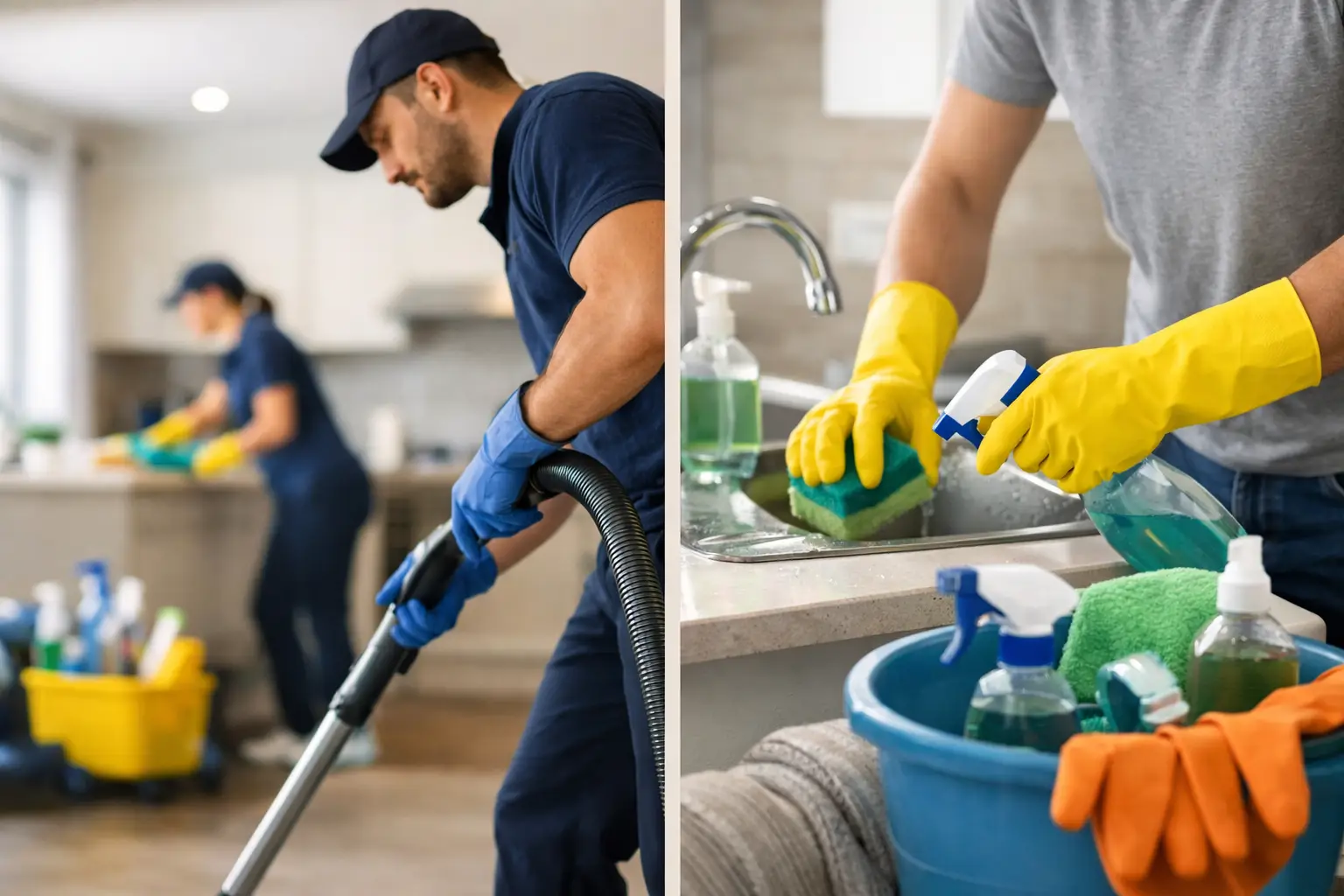
A move-out clean often looks manageable until the furniture is gone. What remains is the grease behind the stove, dust along ceiling fans, water marks on glass, and corners that have not been visible for months. For tenants deciding on end tenancy cleaning versus DIY, the real question is not whether you can clean your home yourself. It is whether you have the time, tools, and energy to meet the condition expected at handover.
The right choice depends on the size and condition of the property, your lease requirements, how close you are to moving day, and whether you are comfortable handling detailed cleaning work. A DIY approach can save cash in some situations. Professional help can reduce last-minute pressure and make the cleaning scope clearer. Neither option is automatically right for every HDB flat, condo, studio, or landed home.
End Tenancy Cleaning Versus DIY: Start With the Handover Standard
End-of-tenancy cleaning is different from a normal weekly clean. A regular cleaner maintains a lived-in home. A move-out clean focuses on restoring accessible areas after daily use, so the next occupant or property owner receives a properly cleaned space.
Before choosing a method, read your tenancy agreement and review the property condition report or inventory list if one was provided when you moved in. Look for specific requirements concerning air-conditioning servicing, curtains, mattresses, appliances, or professional cleaning receipts. Do not assume that a general deep clean covers every item named in the agreement.
It also helps to separate normal wear from cleaning issues. Faded paint, aged sealant, and wear on fixtures are not always matters that cleaning can resolve. On the other hand, grease buildup, soap residue, mold spots, food debris, stains, and dust accumulation can affect the landlord’s handover assessment. Take dated photos before you begin and again after the property is cleaned. This gives both sides a clearer record of the home’s condition.
When DIY Cleaning Makes Sense
DIY can be a sensible choice for a small studio or a well-maintained one-bedroom unit, especially if you have moved out early and can clean without rushing. It may also work if the lease does not require a professional service and you already own suitable equipment.
The cost advantage is real only when you account for supplies, transport, and time. Buying degreaser, bathroom cleaner, microfiber cloths, scrub pads, a mop, a vacuum, and specialty products for glass or oven interiors can add up. If you need to rent equipment or make repeated trips back to the empty property, the savings become smaller.
DIY is most practical when you can work methodically over more than one session. In Singapore’s humid conditions, bathrooms and kitchens can develop residue and odors quickly. A unit that appears tidy may still need close attention around floor traps, grout lines, cabinet interiors, window tracks, and appliance edges.
For a DIY clean to be effective, plan to cover at least these areas:
- Kitchen surfaces, cabinet interiors, sink, backsplash, stovetop, hood exterior, and accessible appliance surfaces
- Bathrooms, including toilet bowls, shower screens, taps, mirrors, floor traps, wall tiles, and grout
- Bedrooms and living areas, including built-in storage, skirting boards, switches, fans, blinds, and window tracks
- Floors, doors, handles, accessible windows, and any balcony or service-yard areas included in the tenancy
A checklist prevents the common mistake of cleaning the visible center of each room while missing the details that are noticed during inspection. Work from high to low, clean dry dust before using wet products, and allow enough drying time before the handover.
Where DIY Usually Becomes Difficult
The challenge is rarely basic sweeping or wiping. It is the detailed work that takes longer than expected. Grease on the top of kitchen cabinets, scale around faucets, dust inside air vents, adhesive residue, and grime behind appliances can require the right product and careful technique.
There is also a risk in using strong chemicals without testing them first. Harsh cleaners can damage stone surfaces, certain metal finishes, painted cabinets, wood flooring, and silicone seals. Scrubbing too aggressively can leave visible scratches that become a separate handover concern. When in doubt, use a suitable product on a small hidden area first and follow the manufacturer instructions.
Time is another practical issue. Many tenants are coordinating movers, utility accounts, work commitments, keys, and a new home at the same time. Cleaning an entire apartment after packing can take far longer than expected, particularly for families or tenants who have lived in the property for several years.
What Professional End-of-Tenancy Cleaning Changes
A professional service is mainly about labor, structure, and accountability. Trained cleaners arrive with a defined scope and follow a room-by-room process. This is useful when the property is larger, the condition is heavier, or the move date leaves little room for rework.
For many tenants, the value is not simply avoiding cleaning. It is avoiding the uncertainty of wondering whether the bathroom, kitchen, cabinets, and high-touch areas were handled properly before the final inspection. A clear quotation should state what is included, what requires an add-on, and what is outside the service scope.
At Singapore House Cleaning, end-of-tenancy work is quoted based on property size, condition, requested coverage, and any additional needs. This matters because a vacant, lightly used two-bedroom condo is not the same job as a family-sized HDB flat with grease buildup, pet hair, or extensive built-in storage. A fixed price without questions may sound convenient, but it can create confusion later if the actual condition requires more time.
Professional cleaning does not remove every handover responsibility. Tenants may still need to arrange services required by their lease, such as air-conditioning servicing or pest treatment. Major stains, damaged fixtures, renovation debris, paint work, and inaccessible areas may also sit outside a standard cleaning scope. Ask directly about these items before booking rather than assuming they are included.
Cost, Time, and Risk: A Practical Comparison
DIY has the lower upfront price when the home is small and already in good shape. It gives you complete control over the products used and allows you to clean at your own pace. Its trade-off is your time, physical effort, and the possibility of needing to return for touch-ups after an inspection.
Professional cleaning costs more upfront, but the quote covers a team or cleaner’s labor, cleaning process, and scheduled service time. It is often the better value when taking unpaid leave, managing children, or making multiple trips would cost more than the cleaning itself. It can also be useful for landlords preparing a unit promptly between tenants.
Neither choice guarantees the return of a security deposit. Deposit decisions depend on the lease, documented pre-existing condition, damage, outstanding bills, and the landlord’s assessment. What a thorough cleaning service or a careful DIY record can do is reduce avoidable disputes about cleanliness.
How to Choose Without Guesswork
Choose DIY if your unit is compact, lightly used, you have enough time before handover, and the tenancy agreement does not require professional work. It can be a cost-conscious option when you are organized and willing to handle detailed cleaning yourself.
Consider professional end-of-tenancy cleaning if you are on a tight schedule, the property has multiple bathrooms or rooms, kitchen grease and bathroom buildup are significant, or you want a defined cleaning scope before inspection. It is also worth considering if you have already moved and do not want to spend your final weekend returning to the old property with cleaning supplies.
Whichever route you take, avoid leaving the clean until moving day. Empty rooms reveal more marks and dust than furnished ones, and a rushed job is where missed areas happen. Set aside time for a final walk-through in daylight, bring your inventory or checklist, and check each room from the entrance to the corners.
A clean handover is less about making a home look staged and more about leaving it in a fair, hygienic condition for the next person. Give yourself enough time to do that properly, or arrange dependable help early enough that moving day can stay focused on the move.