

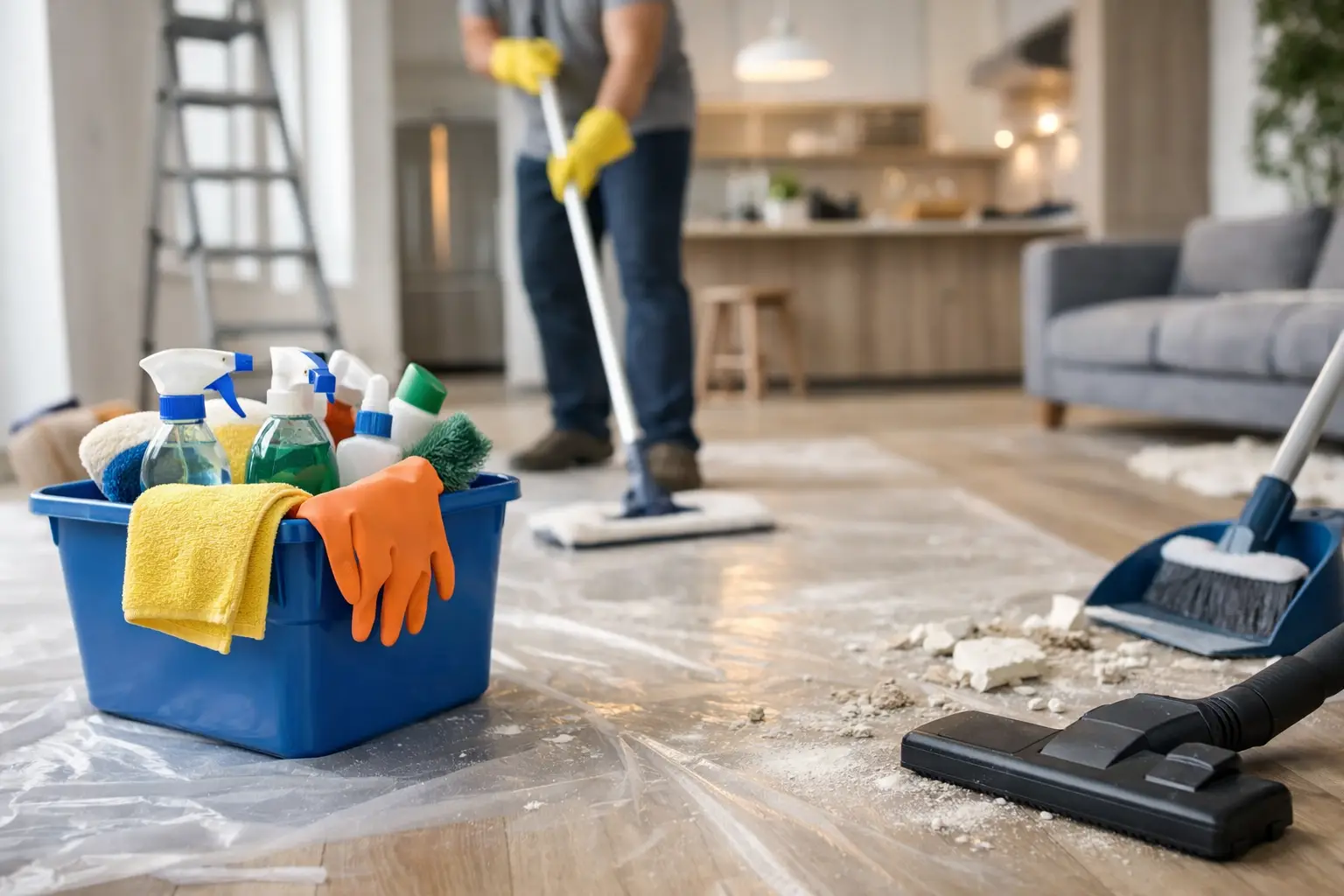
Renovation may be finished when the contractors leave, but the home is rarely ready to use straight away. Fine dust settles inside cabinets, on window tracks, under appliances, and across surfaces that can look clean at first glance. Essential post renovation cleaning tasks deal with this leftover dust, paint marks, adhesive residue, and construction debris so your home is properly prepared for daily living.
For Singapore households, this work matters even more because humidity can make dust cling to surfaces and allow damp odors to linger in enclosed rooms. A quick wipe-down may improve appearances, but it often misses the areas that affect hygiene, air quality, and the condition of new fittings.
Start With Safety and Site Clearance
Before detailed cleaning begins, the renovation team should have removed major waste, loose packaging, discarded materials, and sharp items such as screws, tile fragments, or broken glass. Cleaning is more effective once there is a clear path through each room.
Check that renovation work is genuinely complete. If painters are returning to touch up walls or carpenters still need access, it is usually better to schedule intensive cleaning after the final work is done. Otherwise, fresh dust and footprints can undo the cleaning effort.
Switch off air-conditioning units while heavy dust is being removed, where practical. This prevents loose dust from circulating through the room. Wear gloves and a suitable mask when handling visible construction dust, especially around drilling areas, false ceilings, or built-in carpentry.
Remove Fine Dust Before Using Water
The most time-consuming part of post-renovation cleaning is dust removal. Renovation dust is finer than ordinary household dust. It can sit on walls, light fittings, cabinet interiors, skirting boards, door frames, electrical switches, window ledges, and even inside drawers that were closed during the work.
Start high and work downward. Ceiling fans, vents, curtain tracks, upper cabinet tops, and light fittings should be dusted before walls, furniture, and floors. Vacuuming with the right attachments is usually more effective than sweeping, which can push fine dust back into the air.
After vacuuming, wipe hard surfaces with clean microfiber cloths. Cloths should be rinsed or changed regularly. Using one dusty cloth around the entire home can spread powdery residue from room to room, particularly across dark countertops, glass panels, and newly installed wardrobes.
Walls need a careful approach. Painted walls, wallpaper, and feature panels can be damaged by aggressive scrubbing or overly wet cloths. Test a small hidden area first, then use a lightly damp cloth only where needed. If there are paint splatters, ask whether they can be safely removed without affecting the finish.
Clean Cabinets, Storage, and Built-In Carpentry
New cabinets often look spotless from the outside while holding sawdust and drilling dust inside. Kitchen units, wardrobes, shoe cabinets, TV consoles, bathroom vanities, and drawers need to be cleaned internally before items are stored.
Open every cabinet door and drawer. Vacuum joints, corners, hinges, shelf supports, and drawer runners, then wipe the internal surfaces. Pay attention to laminate edges and the underside of shelves, where fine dust can collect unnoticed.
Do not soak cabinetry with water. Most built-in furniture requires a controlled wipe rather than wet cleaning, as excess moisture may affect joints, boards, or unfinished edges. This is one area where gentle cleaning is more useful than trying to force a faster result.
For kitchen cabinets, clean the exterior handles and surrounding surfaces as well. Renovation workers may have touched them repeatedly, leaving fingerprints, dust, sealant, or adhesive traces. Once the cabinets are clean and dry, leave doors slightly open for a short period if there is a new-furniture smell.
Deal With Paint, Glue, Grout, and Adhesive Marks
Not all marks should be treated the same way. Paint drips, silicone, grout haze, double-sided tape, sticker residue, and cement dust each need a different method. Using strong chemicals without checking the surface can dull tiles, scratch glass, or damage stone countertops.
Glass panels and windows often have protective film residue, paint specks, and dusty tracks. Remove loose dust first, then clean the glass with a suitable cleaner and a lint-free cloth. Window tracks should be vacuumed before wiping because dampening packed dust can turn it into a stubborn muddy layer.
For tiled bathrooms and balconies, look for grout haze, cement particles, or silicone residue near corners and fittings. These areas may need more detailed work than regular bathroom cleaning. Avoid harsh acidic products on natural stone or unknown tile finishes unless the material is confirmed to be suitable.
If marks are extensive or appear to be part of an incomplete handover, raise them with the contractor before cleaning too aggressively. A cleaning team can remove many common residues, but repairing chipped tiles, scratches, damaged sealant, or uneven grout is outside a normal cleaning scope.
Give Kitchens and Bathrooms a Full Detail Clean
Kitchens and bathrooms need more than dust removal because they contain new fixtures, enclosed storage, and surfaces that will be used for food preparation or personal care. Clean the sink, countertop, backsplash, cabinet interiors, faucet, hob area, and floor thoroughly before moving in appliances, cookware, or groceries.
A newly installed kitchen may still have grease from fitting work, fingerprints on stainless steel, and dust behind drawers. If appliances are already in place, clean around and beneath them where accessible. Do not assume a new oven, refrigerator, or hood is clean inside just because it is unused. Packaging dust and installation debris can remain.
In bathrooms, clean the toilet bowl and exterior, basin, shower screen, floor drain, mirror, wall tiles, taps, and vanity storage. Run water briefly to check whether dust is collecting around drains. It is also sensible to ventilate the room afterward, as enclosed bathrooms can hold onto sealant or paint odors in Singapore’s humid weather.
Finish Floors, Windows, and Air-Contact Surfaces
Floors are the final major task because dust from higher surfaces will continue to fall during cleaning. Vacuum first, including edges and corners. Then mop using a method suited to the flooring type. Vinyl, wood-look flooring, marble, and natural stone should not be treated like ordinary ceramic tile.
Use minimal water on flooring that is sensitive to moisture, and avoid abrasive pads on new surfaces. If the floor still feels gritty after mopping, it may need another vacuum and wipe rather than more cleaning solution. Too much product can leave a sticky film that attracts dust quickly.
Do not forget the places that influence how the home feels once the doors are closed: air-conditioning vents, ceiling fans, door tops, window tracks, switches, sockets, and skirting boards. These details are easy to skip, yet they often release dust back into the room after the first few days of occupancy.
Know What a Cleaning Service Can and Cannot Cover
A proper post-renovation cleaning scope should be clear before the appointment. Property size, number of bathrooms, amount of built-in carpentry, condition of windows, and whether the unit is furnished all affect the time and cost involved. An HDB apartment with a renovated kitchen may need a very different approach from a landed home with multiple new bathrooms and extensive glass.
Be upfront about difficult areas when requesting a quote. Mention paint stains, renovation dust inside cabinets, balcony work, sticker residue, high windows, or appliances that need internal cleaning. Photos and a clear room-by-room description help avoid misunderstandings on the day.
Singapore House Cleaning provides practical post-renovation support based on the home’s condition and requested scope. Cleaning can address dust, surfaces, fittings, cabinets, kitchens, bathrooms, and floors, while repair work, heavy debris disposal, and contractor defects should be handled separately.
A freshly renovated home deserves more than a fast surface wipe. Once the dust is removed from the places you cannot immediately see, you can unpack, settle in, and enjoy the work that went into the space with far less mess following you into everyday life.