

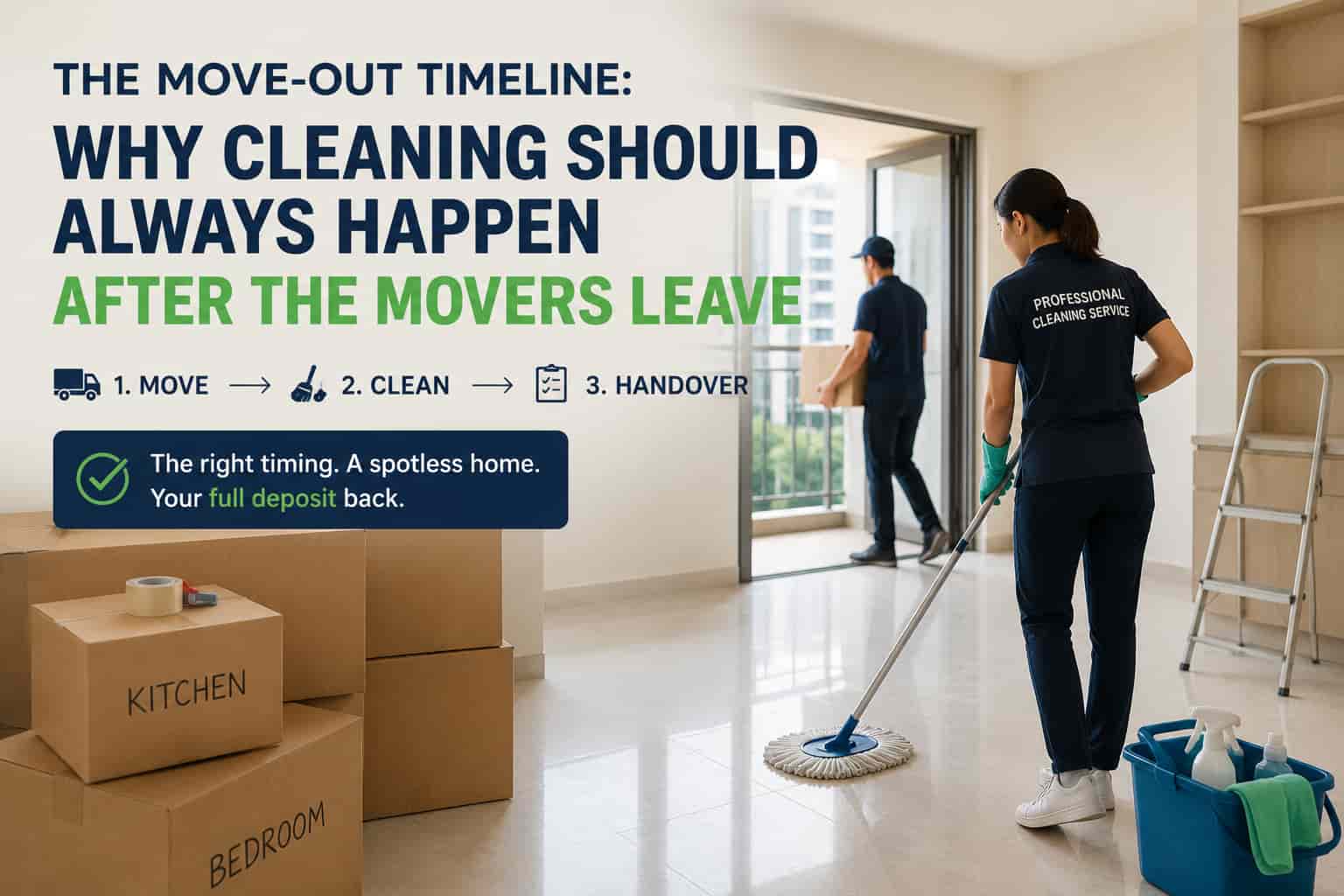
Moving house in Singapore is widely regarded as one of the most high-pressure life events an individual can experience. Between the logistical complexity of coordinating with movers, updating your residential address with government agencies, and managing the transition of utilities with SP Services, the final requirement—the move-out clean—is often the straw that breaks the camel’s back.
However, the secret to a stress-free transition isn’t just how you clean, but when you clean. One of the most pervasive mistakes tenants make is poor chronological scheduling. Specifically, attempting to perform a deep clean while movers are still hauling furniture out of the premises.
In this comprehensive guide, we will break down the science of the move-out timeline, explore the “Hidden Dust” phenomenon, and explain why a house cleaning service in Singapore is your best defense against a lost security deposit.
1. The Fundamental Conflict: Movers vs. Cleaners
In Singapore’s tropical, high-humidity environment, dust doesn’t just sit on surfaces; it bonds with moisture to create a thin layer of grime. When heavy furniture, wardrobes, and appliances are shifted for the first time in years, they act as “dust anchors,” releasing a massive volume of particulates into the air.
The Airborne Particle Problem
If you hire a part time cleaner to work simultaneously with your movers, you are essentially paying for a redundant service. As soon as a shelf is wiped or a floor is mopped, the movement of cardboard boxes and the dragging of heavy sofas across the floor generate a new layer of airborne debris that settles within minutes.
Safety Hazards and Logistical Bottlenecks
Moving house requires clear pathways for safety. Having a cleaning team with vacuum cords, mop buckets, and spray bottles in the same hallway as movers carrying a 50kg refrigerator is a recipe for disaster. By separating these two distinct phases, you ensure that both the movers and the cleaning professionals can work at peak efficiency without physical obstruction.
2. The “Hidden Dust” Phenomenon: What You Only See When It’s Empty
Most tenants underestimate how dirty a “clean” house actually is until the furniture is gone. A property that looks spotless while furnished often reveals several “pain points” once it becomes an empty shell:
Skirting Board Build-up: Dust accumulates behind beds and heavy cabinets, often forming thick “felt” that requires industrial-strength vacuuming.
Shadow Lines: Frames and large furniture often leave marks on walls and floors that only become visible in the empty light.
Balcony Grime: Singapore’s rain and humidity often lead to algae and soot build-up in balcony tracks that are usually covered by outdoor furniture.
By waiting until after the movers leave, your moving out cleaning service can address these revealed areas directly, ensuring the landlord sees a pristine environment during the final walk-through.
3. Designing the Perfect “T-Minus” Moving Timeline
To successfully pass a Singaporean property inspection, you need a military-grade schedule. Here is the recommended 72-hour countdown:
T-Minus 48 Hours: The Move-Out Day
Morning: Movers arrive to load the truck. Your role is purely supervisory.
Afternoon: Final sweep of the “empty” house to ensure no personal items were left in drawers or at the back of cupboards.
Evening: Hand over the empty unit to the cleaning team for the following morning.
T-Minus 24 Hours: The Deep Clean Day
This is when your moving out cleaning service performs the heavy lifting. Since the unit is empty, they can focus on:
Degreasing the kitchen hood and hob.
Descaling bathroom tiles and glass partitions.
Wiping down the interiors of all built-in wardrobes.
Cleaning window tracks and ceiling fans.
T-Minus 0 Hours: The Handover Inspection
Schedule the agent or landlord’s visit for the day after the cleaning. This allows the floors to dry completely and the “freshly cleaned” scent to linger, which psychologically predisposes the agent to a positive review.
4. Why DIY Cleaning Often Results in Deposit Deductions
It is a common temptation to try and save money by cleaning the unit yourself. However, “moving fatigue” is a real factor. After three days of packing and one day of heavy moving, the average person lacks the physical stamina to perform the level of scrubbing required for a professional handover.
The Standard of “Rent-Ready”
In Singapore, “clean” isn’t just about the absence of dirt; it’s about being “rent-ready”. If a landlord has to hire a cleaner after you leave because you missed the grease in the oven or the hair in the shower drain, they will often deduct the full cost of a professional service from your deposit—usually at a much higher rate than if you had booked it yourself.
5. The Role of Regular Maintenance
The secret to an easy move-out is consistent upkeep. If you have utilized a part time cleaner throughout your tenancy for weekly or bi-weekly sessions, the “deep clean” required at the end becomes significantly less intensive.
Regular maintenance prevents:
Permanent Limescale: Hard water stains in Singapore bathrooms can become permanent if left for years.
Kitchen Grease Carbonization: Heat from cooking “bakes” grease onto surfaces over time, making it nearly impossible to remove without damaging the finish.
Mold Spores: Regular wiping of air-con vents and window frames prevents the spread of mold in Singapore’s tropical climate.
6. Technical Checklist: Maximizing Your House Cleaning Service in Singapore
When engaging a professional house cleaning service in Singapore, you must ensure the environment is ready for them to succeed.
Essential Requirements for Your Cleaners:
Electricity and Water: Never cut off your SP Services account before the cleaning is done. Cleaners cannot vacuum in the dark or scrub floors without water.
Access and Logistics: Ensure the cleaners have the correct entry codes or that the guardhouse is informed of their arrival if you live in a condo.
Defrost the Fridge: If the refrigerator is staying with the unit, it must be emptied and defrosted 24 hours prior so the cleaners can wipe the interior dry.
7. Strategic Peace of Mind
The logic of the move-out timeline is clear: Move first, clean second. By respecting this chronological order, you eliminate redundant work, protect your health from airborne dust, and ensure your home is presented in its absolute best light.
A professional moving out cleaning service is not just a convenience; it is a strategic investment in the return of your security deposit. Plan your timeline, trust the professionals, and walk away from your old home with the confidence that you have met—and exceeded—your tenant obligations.
FAQ: Scheduling Your Move Out Clean in Singapore
When should move out cleaning be done during a house move in Singapore?
Move-out cleaning should always be scheduled after all furniture, boxes, and movers have left the property. Cleaning an empty unit allows better access to hidden dust, wall edges, floor corners, and areas behind large appliances. This ensures that your house cleaning service in Singapore can reach every square inch without obstruction.
Why should cleaners and movers not work at the same time?
When movers shift heavy furniture, dust and debris become airborne and settle back onto freshly cleaned surfaces. At the same time, cleaners and movers can block each other’s workflow, making the entire process slower and less efficient. To get the most value from your moving out cleaning service, it is best to let the movers finish their job completely before the cleaning team arrives.
How many days before handover should cleaning be completed?
Most tenants in Singapore arrange professional cleaning about 24 to 48 hours before the final inspection or key handover. This provides enough time for floors to dry fully and allows a buffer period for minor touch-ups if necessary.
Should electricity and water remain active during move-out cleaning?
Yes. Electricity and water should remain active until the cleaning process is fully completed. Vacuum cleaners, lighting, and water access are necessary for a proper deep cleaning. If you usually employ a part time cleaner, they will also tell you that proper utilities are essential for achieving a professional finish.
What hidden areas become visible only after furniture is removed?
Once the house is emptied, tenants often discover dust behind wardrobes, grease beside kitchen appliances, stains under beds, and dirt trapped inside window tracks or balcony corners. These hidden areas are commonly checked during handover inspections and require the specialized attention of a moving out cleaning service.
Does regular weekly cleaning make move-out cleaning easier?
Yes. Homes that receive regular house cleaning throughout the tenancy usually have less grease buildup, lighter dust accumulation, and fewer stubborn stains. Engaging a regular part time cleaner makes the final move-out cleaning process faster and more manageable.
Related Articles To Read
Move Out Cleaning Checklist for Tenants: Use this checklist once your movers have finished to ensure every room is handover-ready.
Why Some Tenants Lose Part of Their Rental Deposit Over Cleaning: A must-read to understand the financial stakes involved in your move-out timeline.
Post Tenancy Cleaning Checklist: Pass Your Singapore Inspection: Our expert guide on the specific standards Singaporean agents look for during the final walk-through.
Cleaning Checklist Before Moving Into a New Home: Now that your old place is scheduled for cleaning, make sure your next home is ready for you to move in.