

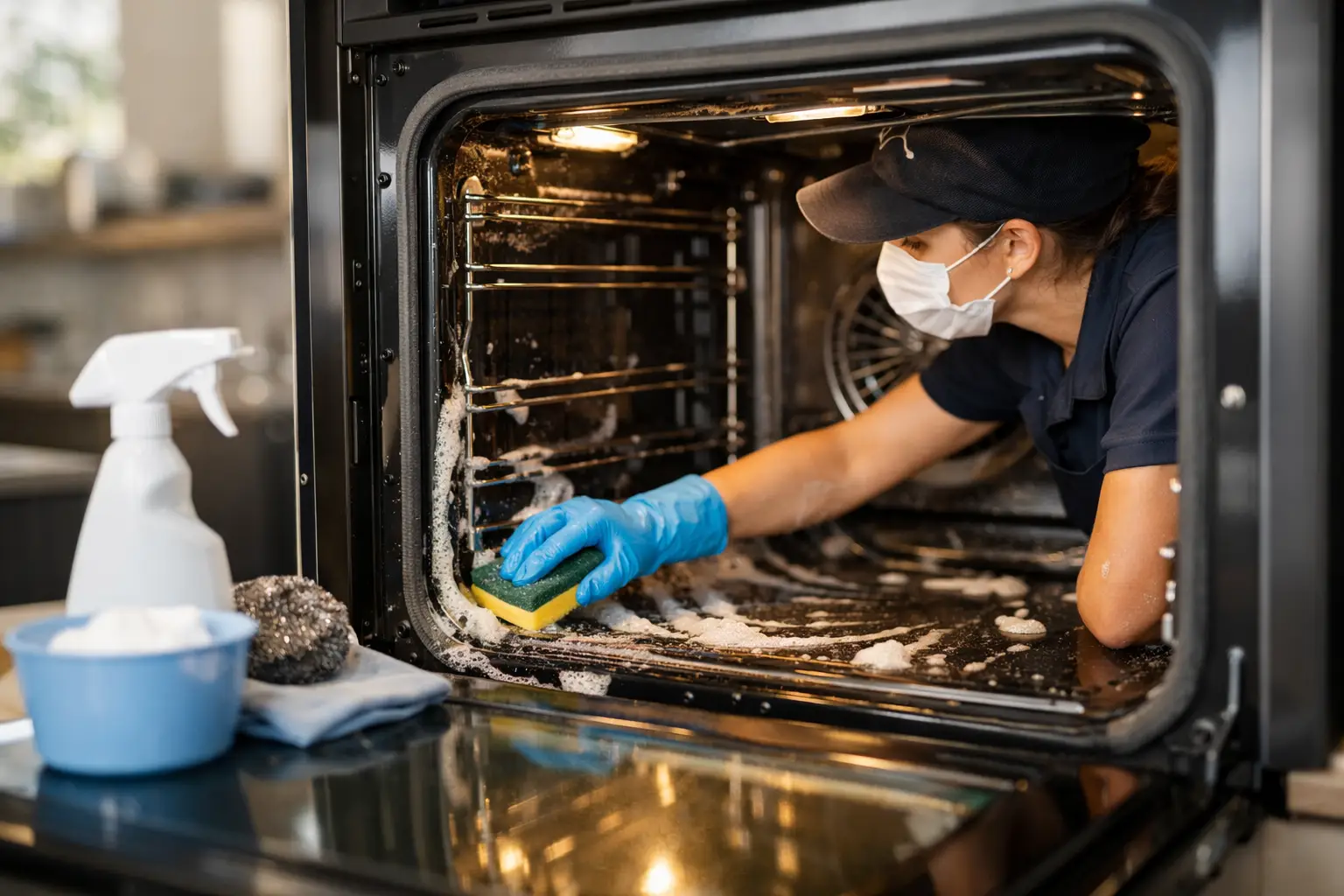
A greasy oven is easy to overlook until smoke rises from an old spill, food picks up an unpleasant odor, or a landlord checks the kitchen at handover. So, do cleaners clean ovens? Often, yes – but oven cleaning is not automatically included in every house cleaning appointment. The answer depends on the service booked, the oven’s condition, and what the cleaning team has confirmed in writing.
For busy households in Singapore, that distinction matters. A weekly cleaner may keep the stovetop, counters, and visible kitchen surfaces in good order, while a one-time deep clean or move-out clean may include more detailed appliance work. Knowing the scope before the appointment prevents disappointment and helps you request the right level of cleaning.
Do cleaners clean ovens as part of a standard service?
In a standard recurring cleaning visit, cleaners usually focus on the areas that need regular attention: wiping accessible kitchen surfaces, cleaning the stovetop, washing the sink, removing everyday grease from backsplash tiles, and mopping the floor. The outside of an oven or microwave may be wiped if it is part of the visible kitchen area.
A full oven clean is different. It can involve degreasing the door, cleaning the glass, removing and washing racks, wiping internal walls, and addressing baked-on residue at the base. This takes more time than routine kitchen upkeep and may require specific products, ventilation, gloves, and extra labor. For that reason, many cleaning providers treat it as a deep-cleaning task or a separately priced add-on.
If your kitchen is maintained weekly and the oven has only light splatters, an inside wipe may be possible during a longer session. If grease has been accumulating for months, do not assume it can be completed within a regular two- or three-hour visit. A clear quotation should state whether internal oven cleaning is included, limited to a basic wipe, or charged separately.
When oven cleaning is usually included
Oven cleaning is more likely to be covered when you book a service designed for intensive work rather than maintenance. This includes move-in deep cleaning, end-of-tenancy cleaning, post-tenancy cleaning, or a tailored kitchen deep clean.
Even then, the exact scope varies. Some services cover the oven exterior and removable racks but exclude heavy carbon buildup. Others include the interior only when the appliance is empty, working, and safe to access. An oven with thick black residue, a strong burnt smell, pest activity, or years of neglect may need additional time and a revised quote.
For rental handovers, oven condition can become a practical issue. Landlords and incoming tenants commonly notice grease inside appliances because it affects both hygiene and the overall presentation of the kitchen. If the oven was part of the tenancy, ask for it to be specifically listed in the cleaning scope rather than relying on a general phrase such as “kitchen cleaning.”
Deep cleaning versus post-renovation cleaning
Post-renovation cleaning does not always mean appliance cleaning. The main job after renovation is usually removing fine dust from floors, ledges, cabinets, fixtures, and accessible surfaces. An installed oven may need exterior dust removal, but internal degreasing is normally a separate request unless it has been used during the renovation period.
A move-in or deep-cleaning appointment is generally the better fit for an oven that needs food grease and residue removed. If you need both renovation dust removal and a detailed kitchen appliance clean, explain this when requesting your quote. It allows the team to plan sufficient time and bring suitable materials.
What a professional oven clean may cover
A properly defined oven-cleaning service commonly covers the door exterior, control panel area, internal door glass where accessible, oven cavity, side walls, base, and removable racks. Cleaners may also wipe the surrounding cabinet fronts and floor area after the work is completed.
The condition of the appliance affects the result. Fresh grease and ordinary cooking splatters usually respond well to degreasing and careful scrubbing. Long-standing burnt-on carbon may improve significantly but may not return to a factory-new appearance in one session. Transparent providers should be honest about this before work starts, particularly when the oven is older or has damaged enamel.
Cleaning the oven is also not the same as servicing it. A cleaning team does not repair faulty heating elements, replace cracked glass, fix loose door seals, or diagnose electrical issues. If the oven does not heat correctly, trips the power supply, leaks gas, or has exposed wiring, arrange a qualified technician first.
Questions to ask before booking
The easiest way to avoid unclear expectations is to describe the oven directly when you contact the cleaning provider. A few details are usually enough: whether it is built-in or countertop, how often it is used, whether racks can be removed, and whether there is heavy grease or burnt residue.
It also helps to ask whether the quote includes cleaning inside the oven, the racks, and the door glass. Ask whether there is an additional charge for heavy buildup, and whether the team needs photos before confirming the price. Photos are especially useful for end-of-tenancy work because they help the provider estimate labor without giving a misleading flat price.
At Singapore House Cleaning, the practical approach is to confirm requested add-ons and property condition before scheduling. This is more useful than a vague promise that every appliance will be cleaned regardless of size, buildup, or appointment duration. You know what is being done, the team knows what to prepare for, and there are fewer surprises on the day.
How to prepare your oven for the cleaners
Preparation is simple, but it can make the visit safer and more efficient. Let the oven cool completely before the appointment. Remove food, trays, foil, and loose items from inside, unless you want the removable racks cleaned as part of the agreed scope.
If the oven has a self-cleaning function, do not run it immediately before cleaners arrive. The cycle uses very high heat and can leave the appliance hot for hours. It may also produce odors or smoke from old residue. A manual clean is often more appropriate when you want the oven ready for use or handover on the same day.
Please mention any special surface, manufacturer instruction, or known fault in advance. Some oven interiors have coatings that can be damaged by abrasive pads or harsh chemicals. A cleaner can adjust the method when this is known beforehand, but cannot safely guess the appliance’s requirements after work has already begun.
When it may be better to book an add-on
An add-on is usually the sensible choice if your oven has visible grease behind the door glass, smoke when preheating, sticky racks, or residue that falls onto food. It is also worth requesting before hosting family, moving out, handing back a rental unit, or moving into a home where the previous occupant left kitchen appliances behind.
For a lightly used oven, regular attention can reduce the need for a major scrub. Wipe spills after the appliance has cooled, clean racks occasionally, and avoid letting grease sit through repeated cooking cycles. Singapore’s humidity does not create oven grease, but warm kitchens can make lingering cooking odors and sticky surfaces more noticeable.
A clean oven is not about chasing a perfect showroom finish. It is about removing the residue that causes smoke, odor, and an uncomfortable cooking experience. When booking a cleaner, state the condition clearly, confirm the scope before the appointment, and give the job the time it genuinely needs.