

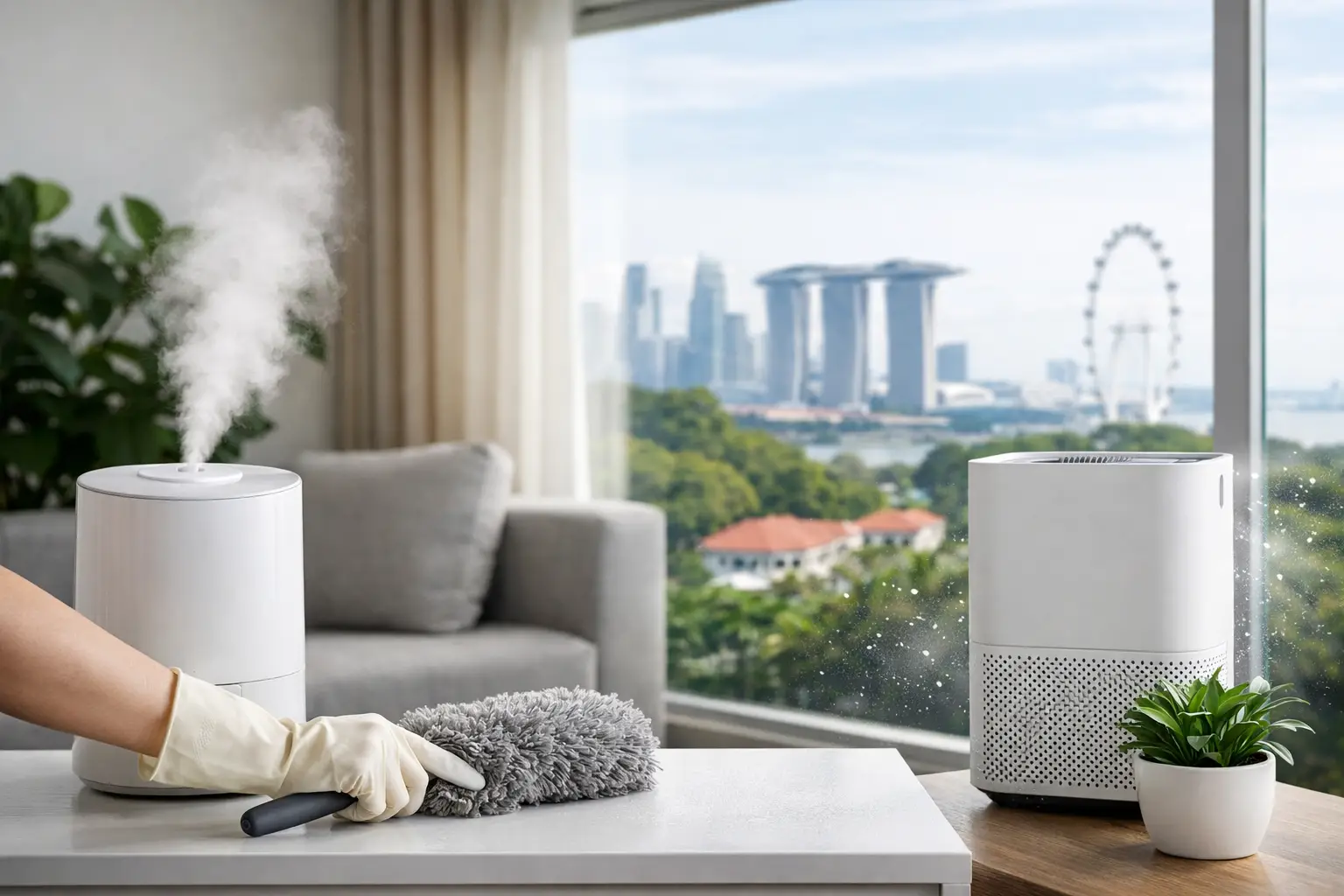
That gray film on the TV console, shelves, and ceiling-fan blades can return quickly in Singapore, even after a thorough clean. If you are wondering how to reduce humidity dust at home, the answer is not simply to dust more often. You need to manage moisture, improve airflow, and remove dust in a way that does not send it back into the room.
Humidity does not create household dust by itself. Dust still comes from skin flakes, fabrics, paper fibers, outdoor particles, cooking residue, and renovation debris. However, damp air can make fine particles cling to surfaces, fabrics, and greasy kitchen areas. It can also create conditions that encourage dust mites and mold, especially in closed bedrooms, bathrooms, and storerooms.
Why Humidity Makes Dust Harder to Control
In an air-conditioned Singapore home, it is common to move between cool rooms and warm, humid areas. Condensation can form near windows, around air-conditioning vents, or inside cabinets placed against exterior walls. Dust that lands on slightly damp surfaces becomes more stubborn than dry, loose dust. Wiping it with a dry cloth may leave streaks or push it into corners.
High humidity also affects soft furnishings. Curtains, bedding, rugs, upholstered sofas, and fabric headboards can hold dust and moisture at the same time. If a room smells stale shortly after cleaning, the issue may be trapped humidity in fabrics or poor air circulation rather than a lack of cleaning effort.
The target is not to make the home completely dry. Air that is too dry can be uncomfortable, and running appliances continuously can increase electricity costs. For most households, a steady, practical routine works better than reacting only when surfaces look dusty.
How to Reduce Humidity Dust at Home Step by Step
Keep indoor humidity under control
Start by identifying rooms that stay damp: bathrooms without windows, bedrooms kept closed all day, utility areas where laundry dries, and storerooms with limited ventilation. A small humidity meter can help you spot patterns, but you can also look for warning signs such as musty odors, condensation, mildew marks, or towels that take too long to dry.
Use air conditioning or a dehumidifier strategically in the rooms where moisture is most persistent. Close windows and doors when the air conditioner is running so it can work efficiently. In a bathroom, run the exhaust fan during showers and for a while afterward. If there is no exhaust fan, keep the door open once the room is no longer in use and dry wet surfaces promptly.
Avoid drying laundry indoors whenever possible. A rack of damp clothes can raise moisture levels throughout a compact HDB flat or condo, particularly when windows are closed for rain or haze. If indoor drying is necessary, place the rack near ventilation and use a fan or dehumidifier nearby. Do not dry clothes in a bedroom where people sleep.
Improve airflow without inviting more dust inside
Fresh air helps, but leaving windows open all day can also bring in outdoor dust from roads, construction activity, or nearby common corridors. The right approach depends on your location and the time of day.
Open windows briefly when outdoor conditions are reasonably dry and clean, especially after cooking or showering. Cross-ventilation is useful when openings on opposite sides of the home can be opened safely. Then close windows if rain is blowing in, the air feels damp, or visible dust is entering from outside.
Use fans to move air through stagnant areas, not just to cool the room. A fan pointed toward a doorway can help a closed room exchange air with the rest of the home. Keep fan blades clean, though. A dusty fan redistributes particles every time it runs.
Clean from high surfaces down to the floor
The order of cleaning matters. Dust ceiling fans, air-conditioning vents, curtain rods, high shelves, and the tops of cabinets first. Then clean tables, countertops, appliances, and lower furniture before vacuuming or mopping the floor. If you mop first and dust afterward, settled particles will land on the freshly cleaned floor.
Use a slightly damp microfiber cloth for hard surfaces rather than a feather duster or dry rag. Microfiber holds fine particles instead of flicking them into the air. Rinse or replace the cloth once it becomes visibly dirty. For electronics and delicate surfaces, use a clean dry microfiber cloth as recommended by the manufacturer.
For kitchens, dust often mixes with grease. This is common on cabinet tops, range hoods, backsplashes, and nearby walls. A basic dusting cloth may not remove the sticky layer. Use a suitable degreasing cleaner, wipe with a clean damp cloth, and dry the area so residue does not collect again quickly.
Vacuum fabrics and floors, not just visible surfaces
Dust settles into places that are easy to miss during a quick weekly wipe. Vacuum sofas, mattress surfaces, fabric headboards, rugs, curtains, and under beds regularly. Use the correct attachment for upholstery and narrow gaps. If household members have allergies, a vacuum with good filtration can make a noticeable difference, provided its filters are cleaned or replaced as required.
Pay attention to hidden dust zones: beneath the sofa, behind the TV console, around bed frames, inside wardrobe corners, and along baseboards. In smaller homes, clutter makes these areas harder to reach and gives dust more surfaces to settle on. You do not need an empty home, but keeping storage organized and leaving some space under furniture makes routine cleaning much more effective.
Mop hard floors after vacuuming. A clean, well-wrung mop is better than one that is overly wet, particularly in humid weather. Too much water can leave floors damp for a long time and may create a stale smell in poorly ventilated rooms.
Give air conditioners and filters regular attention
Air conditioning helps reduce indoor moisture, but a neglected unit can circulate dust and develop odors. Clean washable filters according to the unit instructions and arrange servicing when cooling performance drops, water leaks appear, or a musty smell persists.
Do not block return vents or place large furniture directly in front of indoor units. Air needs to circulate properly for the system to cool and dehumidify the room. If only one bedroom feels dusty while the rest of the home is manageable, check whether its air-conditioning filter, curtains, bedding, or ventilation habits are different.
Air purifiers can help capture fine airborne particles in bedrooms or living rooms, but they are not a substitute for cleaning surfaces and managing humidity. Choose one sized for the room, keep doors and windows aligned with how you intend to use it, and replace filters on schedule. A purifier cannot remove dust already trapped under furniture or stuck to greasy kitchen surfaces.
Set a Routine That Fits Your Home
For many busy households, a short weekly routine prevents the need for constant deep cleaning. Wipe high-touch and high-dust surfaces, vacuum floors and upholstery, clean bathrooms, and wash bedding regularly. Every few weeks, include fans, vents, window tracks, cabinet tops, and the spaces behind movable furniture.
Homes with pets, young children, open windows near busy roads, or ongoing renovation work may need more frequent attention. A studio apartment may be quick to clean but can feel humid faster because cooking, laundry, and sleeping happen in a smaller space. Larger landed homes often need more focus on unused rooms, stair areas, and storage spaces where air movement is limited.
After renovations or a move, ordinary weekly cleaning may not be enough. Fine construction dust can settle repeatedly from ledges, drawers, light fittings, and air-conditioning vents. A detailed post-renovation or move-in clean removes the buildup before you establish a maintenance routine.
When the Problem Is More Than Dust
If you see recurring mold, peeling paint, persistent condensation, water stains, or a strong damp odor, cleaning alone will not solve the source of moisture. Check for plumbing leaks, damaged seals, drainage issues, or air-conditioning problems. Landlords and tenants should document the condition early, particularly before a rental handover.
For routine household upkeep, Singapore House Cleaning can help with practical recurring cleaning that covers the areas where humidity-related dust tends to build up. A clear service scope is useful when you need help with regular maintenance, move-in preparation, or the heavier cleaning required after renovation work.
A home will always collect some dust in a dense, tropical city. The workable goal is to stop it from becoming sticky, stale, or difficult to remove. Keep moisture moving out, remove particles in the right order, and give the neglected corners attention before they become a bigger cleaning job.