

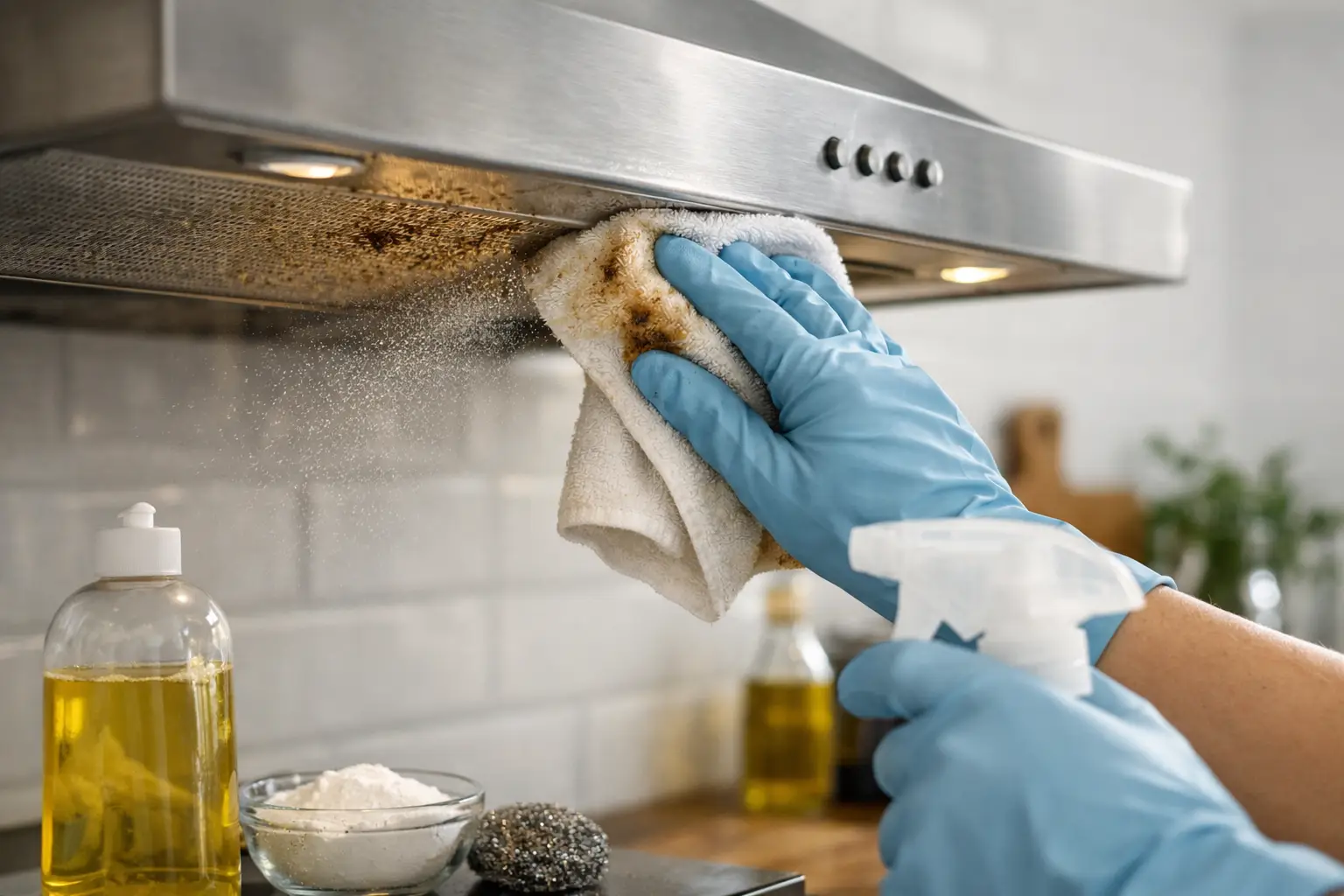
A sticky cabinet handle, a yellowish film above the stove, and dust that clings to the range hood are all signs that cooking grease has settled in. Knowing how to remove kitchen grease buildup early makes the job much easier. In Singapore homes, where frequent cooking and humidity can make surfaces feel tacky quickly, a small weekly routine can prevent the need for a difficult deep clean later.
Grease is not just a visual issue. It traps dust, food particles, and odors. Left for too long, it can harden on tiles, discolor painted walls, reduce the performance of a range hood, and make kitchen surfaces harder to sanitize properly.
Start With the Right Cleaner for the Surface
The strongest cleaner is not always the best choice. Kitchen grease responds well to warm water and a degreasing product, but cabinets, natural stone, painted walls, and appliance finishes each need a different level of care.
For everyday grease on laminate cabinets, backsplash tiles, stovetops, and countertops, begin with warm water and a few drops of dish soap. Dish soap is designed to break down oil, so it is often enough for fresh residue. Use a soft microfiber cloth or non-scratch sponge, wring it out well, and wipe the area in small sections.
For heavier buildup, use a kitchen degreaser according to the label. Spray it onto a cloth rather than directly onto electrical controls, wood edges, or ventilation openings. Let it sit briefly so it can loosen the grease, then wipe before the product dries.
Baking soda can help with stubborn, baked-on spots on suitable non-delicate surfaces. Make a loose paste with water, apply it gently, and use a soft sponge. Avoid using abrasive powders, steel wool, or harsh scrubbing pads on glossy cabinets, stainless steel, glass cooktops, and painted finishes. They may remove grease, but they can leave permanent scratches or dull patches.
How to Remove Kitchen Grease Buildup From Cabinets
Upper cabinets near the stove often collect the most residue because warm cooking vapors rise and settle there. The top edges of cabinets are easy to miss, especially in compact kitchens where they are not visible at eye level.
Start by removing loose dust with a dry microfiber cloth. If you apply cleaner over dust first, it can turn into a muddy film that spreads across the surface. Next, wipe the cabinet doors, handles, edges, and surrounding trim with a cloth dampened in warm, soapy water.
For sticky grease, work in a small area at a time. Hold the damp cloth against the residue for 20 to 30 seconds rather than scrubbing immediately. This gives the cleaner time to soften the layer. Wipe it away, then go over the area with a separate clean damp cloth to remove soap residue. Dry the surface afterward, especially around cabinet joints and handles.
Wood or wood-veneer cabinets need more caution. Do not soak them or leave cleaning solution sitting on the surface. Use only a lightly damp cloth and dry promptly. If the finish looks uneven after cleaning, do not apply oil or polish until all grease and cleaner residue are fully removed.
Clean the Stovetop and Backsplash After Cooking
The stovetop is where grease begins, so regular attention here protects the rest of the kitchen. Wait until the surface is cool enough to touch safely. Remove burner grates, drip trays, and detachable knobs if the appliance instructions allow it.
Soak removable metal parts in hot water with dish soap for 15 to 30 minutes. This is usually more effective and safer than aggressive scrubbing. Use a soft brush to clean grooves and corners, rinse well, and dry completely before putting the parts back.
For the backsplash, wipe from the area closest to the stove outward. Grease can be nearly invisible on pale tiles until dust sticks to it, so run your hand lightly over the surface after cleaning. If it still feels tacky, it needs another pass.
Grout may need extra attention because it is porous and can hold cooking residue. Use a mild cleaner and a small brush, working gently along the grout lines. Strong bleach-based products are not a general grease solution and may affect grout color, caulking, or nearby finishes. Use them only when there is a separate mold or staining concern and the surface is suitable.
Do Not Neglect the Range Hood and Filters
A greasy range hood can spread odors and reduce airflow. Wipe the exterior weekly, including the underside, buttons, and the area around the fan cover. A cloth dampened with warm soapy water is normally enough for the exterior. Take care not to spray cleaner into switches, lights, or vent openings.
Metal mesh filters need periodic washing. The right frequency depends on how often you cook and what you cook. A household that stir-fries or deep-fries several times a week may need to clean filters monthly, while lighter cooking may allow a longer interval.
Remove filters only after the hood is switched off and cool. Soak them in hot water with dish soap or a suitable degreaser, then use a soft brush to lift residue from the mesh. Rinse thoroughly and let them dry fully before reinstalling. Check the manufacturer instructions first, particularly if the hood uses charcoal filters. Some charcoal filters cannot be washed and must be replaced instead.
If grease is visible inside the hood housing, or the fan still performs poorly after the filters are cleaned, it may be time for professional servicing. Cleaning accessible surfaces is sensible; dismantling electrical or internal fan components without the proper knowledge is not.
Handle Grease on Walls, Floors, and Small Appliances
Grease does not stay close to the stove. Fine airborne oil can settle on nearby painted walls, refrigerator sides, microwave doors, rice cookers, and even the floor in front of the cooking area.
For painted walls, test a small hidden spot first. Use a barely damp microfiber cloth with mild soapy water and wipe gently without saturating the paint. Repeated hard scrubbing can remove or shine the paint finish, particularly on matte walls.
Kitchen floors need a degreasing mop solution when they feel slippery or sticky. Sweep or vacuum first, then mop with a properly diluted floor-safe cleaner. Too much product can leave its own film behind, which attracts more dirt. Finish with clean water if the cleaner requires rinsing, and allow the floor to dry before walking on it.
Small appliances should always be unplugged before cleaning. Wipe exterior surfaces only unless the manufacturer says removable parts are washable. Keep liquid away from vents, cords, sockets, and control panels.
Build a Routine That Keeps Grease Manageable
A practical routine is more useful than waiting for the kitchen to look dirty. Wipe the stove and backsplash after heavy cooking, clean handles and countertop edges weekly, and wash the range hood filters on a schedule that matches your cooking habits.
If you are preparing for a tenancy handover, moving into a previously occupied unit, or dealing with grease after renovation dust has settled, the work may be more extensive. Old grease layers often need repeated treatment, and cleaning every surface without damaging finishes takes time. In these cases, a clearly scoped deep-cleaning service can help you address cabinets, tiles, appliances, and hard-to-reach areas without guessing what is included.
Singapore House Cleaning can provide practical cleaning support for homes that need a more thorough reset, with the scope based on the condition of the kitchen and the type of property. For day-to-day upkeep, however, a warm cloth, the right degreaser, and a few minutes after cooking will usually keep grease from becoming a larger problem.
The most helpful habit is simple: clean the grease while it is still a film, not after it has become a hard, sticky layer. Your kitchen will feel fresher, and the next cleaning session will be much shorter.